


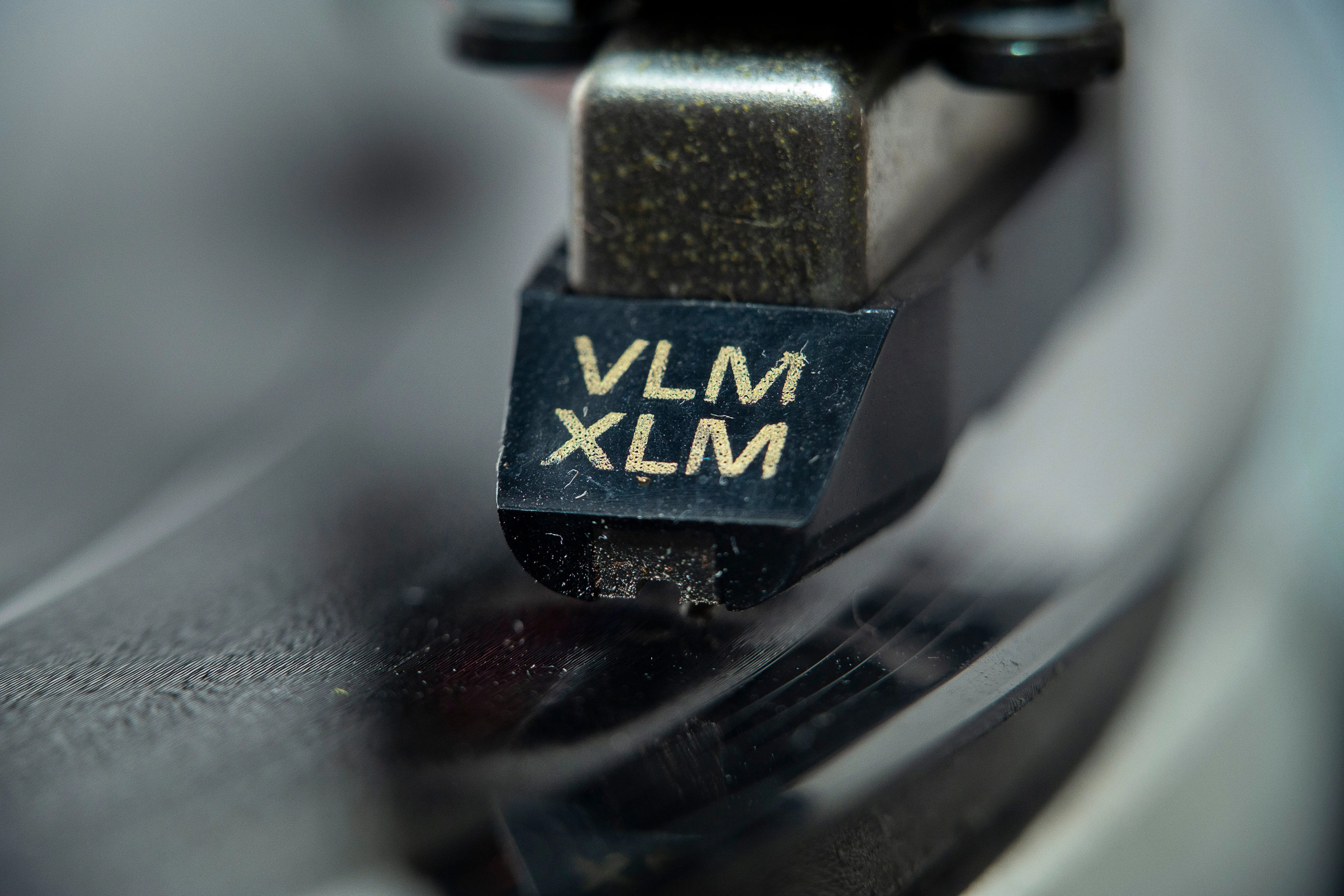
Learning How to Replace a Record Player Needle is a two-minute job on most players: the needle (stylus) sits in a small plastic holder that you pull out of the cartridge, and the new one clicks into place. The tricky part is buying the right one, because styli are specific to each cartridge, and cheap imitations are everywhere. This guide, part of our turntable setup guides, shows how to identify your stylus, which replacements fit the most common players, how to swap it without damage, and what to do when the new one sounds wrong.
Key takeaways
- Normally you replace only the stylus, not the entire cartridge: on most players the needle assembly pulls out and clicks in, with no tools and no rewiring.
- Check the part before you fit it: owners have received the wrong model or a stylus with the diamond missing; a new stylus should sound right from the first record, so muffled sound is a fault, not break-in.
- On popular players a new stylus is inexpensive: $26 for the stock AT-LP60X stylus, $46 for its elliptical upgrade, about €10 for a Crosley NP6.
- Generic styli split owners: some find them as good as the original, others call them junk; if you try one, test it on a record you don’t mind losing first.
- Owners who play about three records a day replace the stylus roughly once a year; the first sign is usually sibilance on “s” sounds, but check the setup before blaming wear.
Step 1: identify the stylus you need
A replacement stylus is matched to the cartridge, not to the turntable brand. Find the cartridge model in one of these three places:
- On the cartridge itself: the model name is usually printed on the front or side (for example AT-3600L, 2M Red, VM95E).
- In the turntable’s manual or spec sheet: listed under “cartridge” or “stylus”.
- On the maker’s support page: most list the replacement stylus part number for each turntable.
Then buy the stylus made for that cartridge. Some cartridges accept upgrade styli from the same family, for example a better elliptical tip in place of a conical one, which is the cheapest sound upgrade many players offer.
When the package arrives, compare the printed part number with your cartridge before you open it. One owner traced a new stylus that sounded muffled and distorted from the first play to a box with a hand-written part number and, under magnification, a shank with no diamond on it at all.
Tip
Before the first play, look at the new stylus with a magnifying glass or your phone’s camera in macro mode. You should see a tiny, bright diamond at the very end of the cantilever. If the shank ends bare, send it back.
Original, upgrade or generic: what owners found
Generic “compatible” styli are sold for many popular players at a fraction of the original price, and owners who have used them are genuinely divided:
- Good experiences: owners report generic styli for Ortofon OM and Shure cartridges that sounded as good as the original and cost about $20 less, and others used unbranded styli for years without audible harm. Some aftermarket packs even turned out to contain repackaged original styli.
- Bad experiences: others use only original or professionally retipped styli and call cheap imitations junk. One collector bought a generic 78 rpm stylus whose LP-grade cantilever collapsed under the tracking force a 78 needs.
The fear most owners share isn’t the sound on day one, but faster record wear, which nobody in these discussions could prove or rule out. The practical rule they agree on: if you try a generic, play a few records you can afford to damage first, and check that it sounds clean and tracks well.
For discontinued cartridges, such as many older Shure and ELAC models, third-party specialists are often the only source of a new stylus. Premium line-contact replacements for those can cost as much as a new cartridge, so compare the two before you buy.
Replacement styli for popular record players
| Player or cartridge | Original stylus | Price | Upgrade option |
|---|---|---|---|
| Audio-Technica AT-LP60X, AT-LP60, Sony PS-LX310BT, Denon DP-300F | ATN3600L | $26 | ATN3600LE elliptical, $46 |
| Crosley suitcase players | NP6 | about €10 | none from Crosley |
| Ortofon 2M Red (many Pro-Ject and other decks) | Stylus 2M Red | $96.99 | Stylus 2M Blue, $166.99 |
| Nagaoka MP-110 (for example Fluance RT85N) | JN-P110 | $99 | none on the same body |
The AT-LP60X upgrade is worth a look: the ATN3600LE has an elliptical tip and a metal cantilever instead of the stock conical tip, and fits every player that uses the AT-3600L cartridge, at $20 more than the original. Our AT-LP60X review covers the player itself.
Step 2: swap the needle
- Switch off the player or turn the volume all the way down, and lock the tonearm in its rest.
- Put the stylus guard on, if your stylus has one.
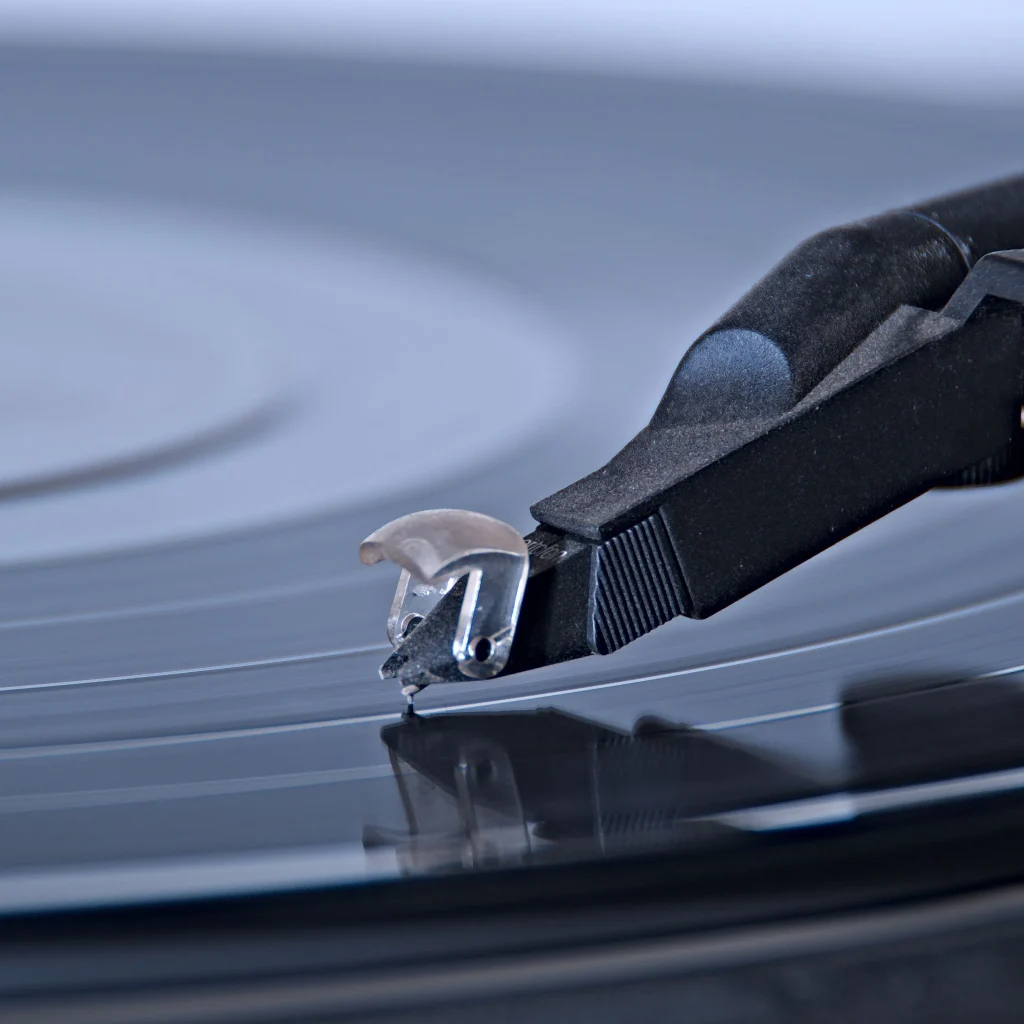
- Hold the plastic stylus carrier with your fingertips, never the thin metal cantilever.
- Pull it out: on most Audio-Technica and Ortofon cartridges it slides forward and slightly down; on many compact and suitcase players the stylus tilts down and unclips.
- Slide or click in the new stylus the same way, until it sits flush with the cartridge body.
- Remove the guard, lower the arm onto a record with the cue lever and listen.
On the tilt-down type, owners describe a small hook at the back of the stylus that sits in the rear of the cartridge slot. First twist the front down to free it, then pull it out. To fit the new stylus, seat the hook at the back first and turn the front up until it clicks. Some compact players have a fixed headshell, so the stylus has to come out with the cartridge in place; the manual’s stylus page usually shows how.
Watch out
The diamond itself is very hard, and a light touch with a fingertip will not damage it. The cantilever it sits on is the fragile part: a knock sideways or a dropped arm can bend it or tear the stylus off. Remove lint with a stylus brush, not your finger.
Because the cartridge body does not move, a stylus swap normally needs no new alignment. If the replacement is a different model (for example an upgrade stylus), check the tracking force it calls for; our guide on how to set up a turntable shows how.
If the new needle sounds wrong
Myth vs fact
Myth: A new stylus needs a break-in period before it sounds right.
Fact: A correct, undamaged stylus sounds good from the first record and at most improves slightly. A muffled or distorted sound from the start points to a wrong, damaged or defective stylus.
| Symptom after the swap | Likely cause | What to do |
|---|---|---|
| Muffled or distorted from the first second | Diamond missing or wrong stylus model | Inspect the tip with a magnifier; check the part number against the cartridge |
| Quiet or one channel weak | Stylus not seated flush | Pull it out and click it in again |
| Distortion on loud passages | Tracking force too light for the new stylus | Set the force the new stylus calls for with a gauge |
| Hair or grime stuck to the tip | Dirty records | Clean the records; use stylus cleaning putty if a brush won’t shift it |
When to replace it
Makers’ figures for stylus life differ by a factor of three, from up to 1,000 hours to 2,000 to 3,000 hours, and real life depends on how clean your records are. Owners who report their habits give a more practical picture: about three records a day means a new stylus roughly once a year, while a record shop playing 16 hours a day replaces it about every three months.
The signs owners notice, roughly in the order they appear:
- Sibilance on “s” sounds and female vocals that were clean before.
- A duller, less detailed sound and new ticks and clicks.
- Dust balling up under the stylus far faster than usual.
- Distortion before the end of a side that cleaning does not fix.
Rule out setup first. Too little tracking force or a misaligned cartridge sounds very much like wear: one owner convinced his three-month-old stylus was worn out found it was simply set too light. Owners who prefer to keep count use a tally clicker next to the deck, one click per side of about 20 minutes, or a reminder in their calendar.
When a new needle is not enough
Replace the whole cartridge instead of the stylus when the cartridge body is damaged, when the cartridge has no removable stylus (most moving-coil types), when a replacement stylus is no longer made, or when a new cartridge costs barely more than its stylus. For the Ortofon 2M Red, the complete cartridge costs $109.99, only $13 more than the $96.99 stylus.
Summary: How to Replace a Record Player Needle
To replace a record player needle, identify the cartridge model, buy the stylus made for it (or an upgrade stylus from the same family), check the part and the diamond before the first play, and swap it by pulling the plastic carrier out and clicking the new one in, with the guard on and without touching the cantilever. A correct stylus sounds right at once; if it doesn’t, look for a wrong part, a missing tip or tracking force set too light. Replace it when sibilance and distortion return that cleaning and setup checks don’t fix.
How to Replace a Record Player Needle: FAQ
Can you replace just the needle on a record player?
Yes, on most players. The stylus is a separate part that pulls out of the cartridge; only cartridges without a removable stylus need replacing as a whole.
Are record player needles universal?
No. Each stylus is made for a specific cartridge model. Check the model printed on your cartridge or in the manual before buying.
Does a new record player needle need breaking in?
No. A correct, undamaged stylus should sound good from the first record. If it sounds muffled or distorted, check the part number and inspect the tip.
Are generic replacement needles any good?
Owners are divided: some find them as good as the original, others had poor fits or fragile parts. Test a generic on records you don’t value before playing your best ones.
How often should a record player needle be replaced?
Makers quote 1,000 to 3,000 hours. Owners who play about three records a day replace it roughly once a year, when sibilance and distortion appear that cleaning doesn’t fix.
Sources (8)
- Ortofon: FAQ, stylus lifetime (no date, verified 11/2026). ortofon.com/pages/faq
- Sumiko Phono Cartridges: Cartridge 101, how to replace a record player needle (no date, verified 11/2026). sumikophonocartridges.com/how-to-replace-a-record-player-needle/
- Turntable Lab: Audio-Technica ATN3600L replacement stylus (product page, verified 11/2026). www.turntablelab.com/products/audio-technica-atn3600l-replacement-stylus-for-at-pl50-at-lp2dusb-at-lp60-at-lp60-usb
- Turntable Lab: Audio-Technica ATN3600LE elliptical replacement stylus (product page, verified 11/2026). www.turntablelab.com/products/audio-technica-atn3600le-elliptical-replacement-stylus-for-at-lp60x-denon-dp-300f-sony-ps-lx310bt
- Crosley Radio Europe: NP6 replacement needle (product page, verified 11/2026). crosleyradio.eu/products/np6-replacement-needle-red
- Turntable Lab: Ortofon 2M Red cartridge and stylus for 2M Red, stylus for 2M Blue (product pages, verified 11/2026). www.turntablelab.com
- Music Direct: Nagaoka JN-P110 replacement stylus (product page, verified 11/2026). www.musicdirect.com/analog-accessories/nagaoka-jn-p110-replacement-stylus/
- SoundStage! Access: Fluance RT85N turntable and Nagaoka MP-110 cartridge (15 June 2025, verified 11/2026). soundstageaccess.com/index.php/equipment-reviews/1342-fluance-rt85n-turntable-and-nagaoka-mp-110-cartridge