


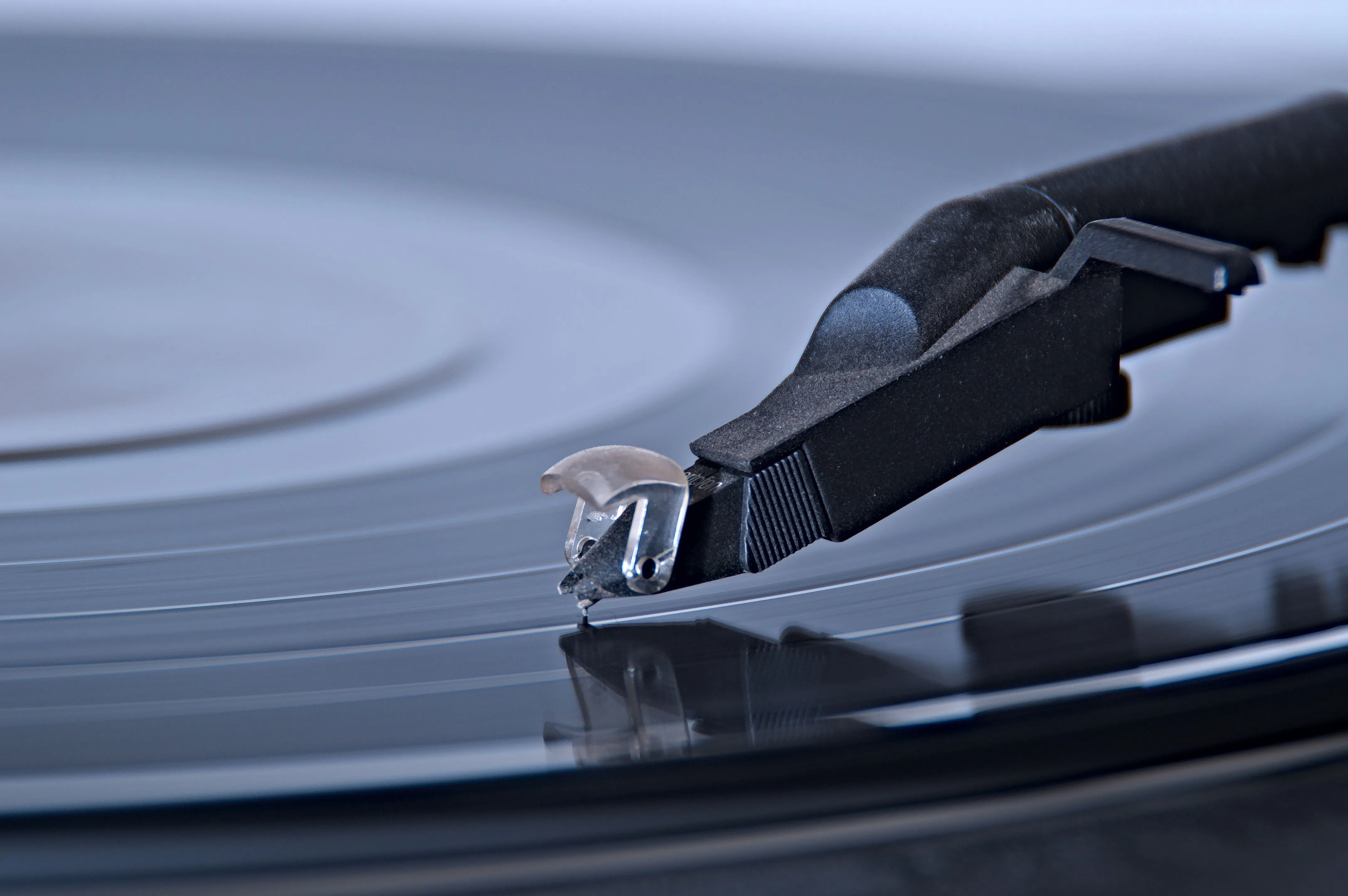
Belt drive vs direct drive: The difference between a belt drive and a direct drive is how the motor turns the platter: through a rubber belt from a motor set off to one side, or with the platter sitting on the motor itself. Each design has its reputation, belt drive for quiet listening and direct drive for DJs, but current specs and owners’ experience show the line is much less clear than that. This guide, part of our turntable reviews, explains how each works, what the spec sheets show, what each costs to keep running, and which one to choose.
Key takeaways
- Belt drive isolates the motor from the platter; the belt is a cheap wear part that owners report lasting 3 to 10 years, much longer than some makers’ advice of 1 to 2 years.
- Direct drive gives high torque and a quick start: a Technics SL-1500C reaches 33⅓ rpm in 0.7 seconds, which matters for DJs and for cueing.
- Speed stability depends on the deck, not the drive type: a belt-driven Fluance RT85 quotes 0.07% wow and flutter, a direct-drive AT-LP120XUSB below 0.2%, and makers measure it differently.
- The weak point of a budget direct-drive deck is the motor: owners with a failing AT-LP120X motor found no replacement part, while a worn belt costs between $10 and $30.
- Most owners who have used good decks of both types hear no difference from the drive itself; below $500, many would choose direct drive for steadier speed, and above that price belt designs dominate.
Belt drive vs direct drive: how each works and what the specs show
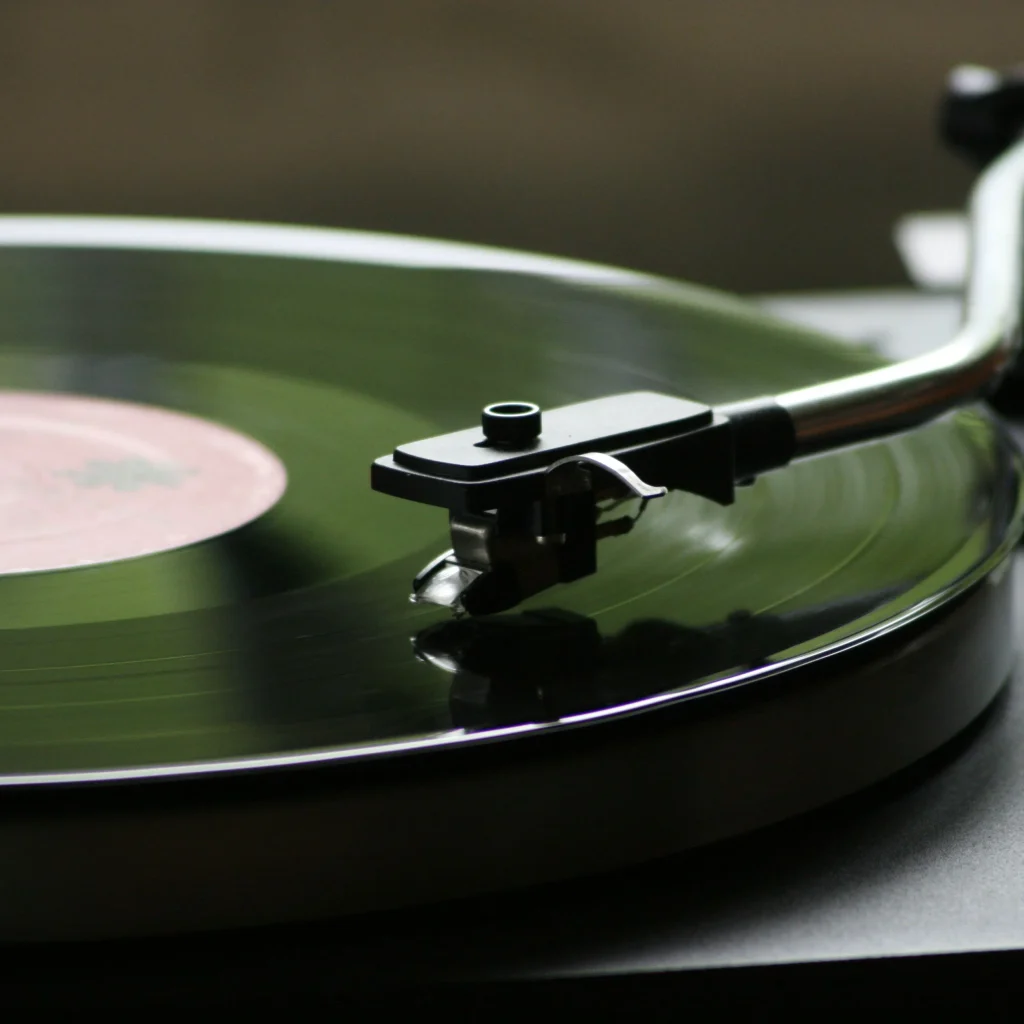
- Belt drive: a small motor sits some distance from the platter and turns it through a rubber or silicone belt around the platter or a sub-platter. The belt absorbs some of the motor’s vibration. Speed changes are usually made by moving the belt or electronically, depending on the deck.
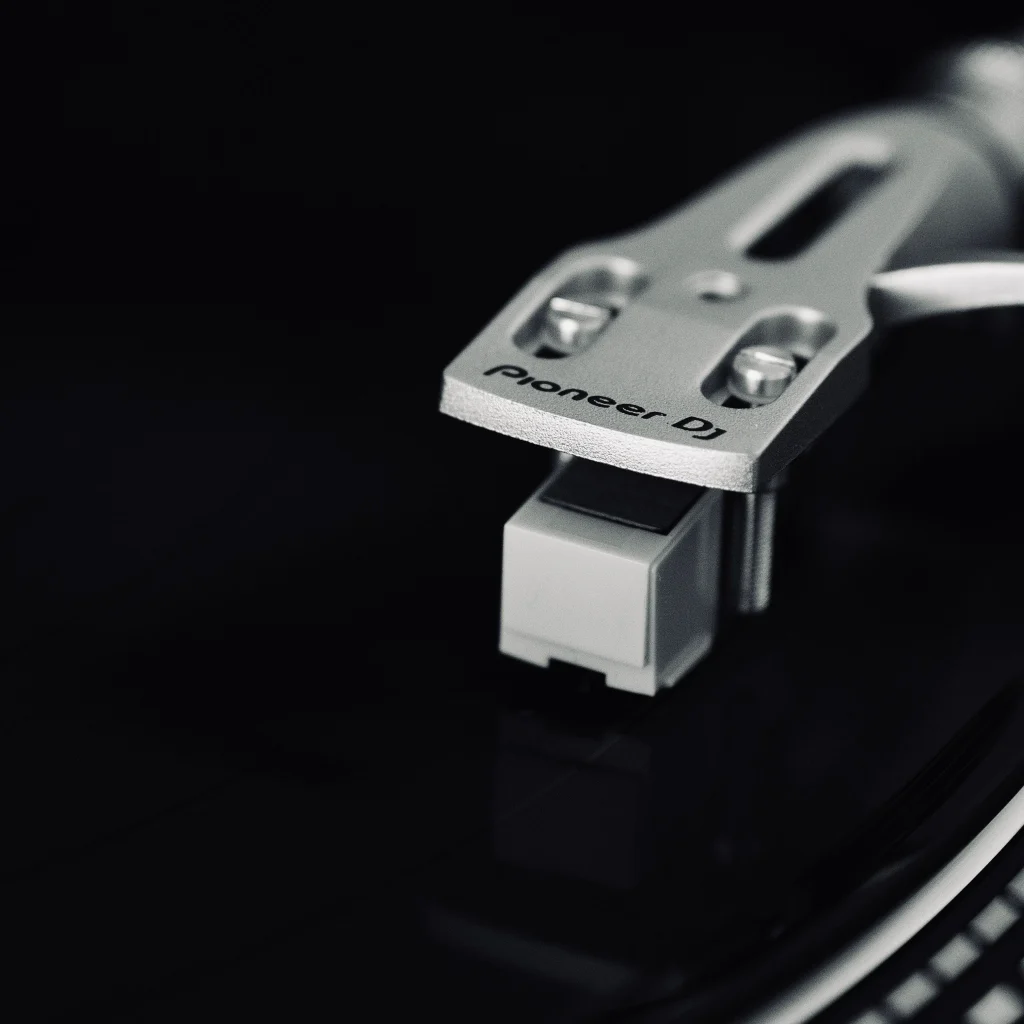
- Direct drive: the platter sits on, or is part of, the motor’s rotor. There is no belt to stretch, and an electronic control loop holds the speed. Motor vibration has no belt to filter it, so good direct-drive designs rely on motor design and damping instead.
| Fluance RT85 | Pro-Ject Debut Carbon EVO | AT-LP120XUSB | Technics SL-1500C | |
|---|---|---|---|---|
| Drive | Belt | Belt | Direct | Direct |
| Wow and flutter (maker) | 0.07% | ±0.17% (33 rpm) | below 0.2% (WTD, JIS) | 0.025% (W.R.M.S.) |
| Speed drift | not stated | ±0.5% (33 rpm) | not stated | not stated |
| Starting torque | not stated | not stated | more than 1.0 kgf·cm | 1.8 kgf·cm |
| Start-up time | not stated | not stated | not stated | 0.7 s to 33⅓ rpm |
Two things stand out. First, the best belt deck here quotes lower wow and flutter than the cheaper direct-drive deck, so the drive type alone does not decide speed stability. Second, makers measure differently: the AT-LP120XUSB states below 0.2% weighted at 3 kHz to the JIS standard, Technics gives a W.R.M.S. figure, and some makers state no standard at all. A W.R.M.S. figure usually reads lower than a weighted peak figure for the same deck, so compare only figures measured the same way, or rely on independent lab tests.
Key figures
- 0.7 s – time for the Technics SL-1500C to reach 33⅓ rpm
- 1.8 kgf·cm – starting torque of the Technics SL-1500C, compared to over 1.0 kgf·cm for the AT-LP120XUSB
- ±0.5% – speed drift specified by Pro-Ject for the Debut Carbon EVO at 33 rpm
Torque and cueing. High torque means the platter reaches speed almost instantly and holds it when you touch the record. That’s why DJs use direct drive: you can hold the record still on a slipmat while the platter spins, release it on the beat, and it plays at the right speed. Belt decks take a few seconds to reach speed and slow down if you drag the record. For home listening this hardly matters; for cueing a radio show or scratching it is decisive. Our AT-LP140XP review covers a direct-drive deck built for DJ use.
How long a belt really lasts
Makers’ advice varies widely. Pro-Ject’s maintenance guidance tells owners to change the belt every year or two at most, one high-end maker suggests every three years, and Linn moved from five to ten years with its newer belt. Owners reporting on their own decks mostly land between 3 and 10 years, depending on use, climate, and the belt’s width and material. A thin belt usually needs replacing sooner than a wide one.
The signs owners notice when a belt is going:
- Slow speed: a familiar album suddenly sounds slightly off, or a speed app or strobe shows the platter running slow.
- Slow or weak start: the platter needs a nudge to get going on 33, or slows down when you run a dust brush over it.
- Wow once per revolution: a pitch wobble that repeats at the same point every turn.
- Visible change: a belt that is stretched, shiny, sticky, crumbling or leaves black residue on the pulley.
What a belt costs
- About $10 to $30 – a replacement belt for most mainstream decks
- $50 to $100 – genuine belts for some high-end decks
- 3 to 10 years – how long owners report belts lasting
Not all replacement belts are equal. Owners who service many decks find cheap generic belts work well on some brands, such as Pioneer, Yamaha and Rega, but are hit and miss on others, and several say generics audibly degrade high-end decks. A generic that is too tight can also strain the motor and bearing, so buy the maker’s belt or one specified for your exact model.
Tip
Before you buy a new belt, check the speed with a strobe disc or a phone strobe app, then clean the belt, pulley and platter rim with isopropyl alcohol. Some owners found speed apps that read slow on one phone and correct on another, so confirm a bad reading with a strobe.
Watch out
When you fit a new belt, make sure it runs at the right height on the pulley. One owner’s new belt sat too low and rubbed on the 33/45 speed-change guide, which made the deck slow and wavy until he raised it. On decks with a belt around the outer platter, lift records by their edges so your fingers don’t knock the belt off.
Direct drive over the years: what fails
A direct-drive deck has no consumable parts in the drive, and many owners run Technics, Denon and Dual decks that are 40 or 50 years old without trouble. The risk is different, not absent: when the motor or its control electronics fail, the repair is harder and dearer than swapping a belt.
On budget decks, owners report two patterns:
- Motor faults with no spare part: one AT-LP120X owner heard a metallic scraping noise and a slight speed dip every second revolution, coming from the motor itself. Others could find no replacement motor for sale, so outside warranty the practical fix was a new deck.
- Unit-to-unit variation: some AT-LP120 owners report five to seven years of quiet, speed-stable use; others got rumble, hum or a warped platter and returned more than one unit before getting a good one. Check a new deck for noise in the first few days, while it can still go back.
On older decks with a pitch slider, owners traced speed drift to a dirty pitch control and dry motor and spindle bearings; contact cleaner on the slider and a drop of oil fixed it.
Myth vs fact
Myth: direct drive always adds motor hum.
Fact: A direct-drive platter turns far too slowly for the motor itself to hum. Hum on a direct-drive deck usually points to a grounding problem, and cogging, the torque pulsing of early designs, was largely solved decades ago; Technics says its current coreless motor removes it.
Can you hear the difference at home?
This is where owners argue most, and the largest group says no. About half of the owners who have used good decks of both types hear no difference from the drive itself, and many add that the tonearm, cartridge and setup matter far more. The rest split both ways: some hear belt decks as fuller and more musical, others hear direct drive as more precise and better at timing, and one owner with a VPI belt deck and a Technics direct drive described the first as more musical and the second as more analytical, with both quiet and speed-stable.
Price changes the answer. Several owners say that under about $500 they would choose direct drive, because cheap direct-drive decks tend to hold speed better than cheap belt decks, some of which run audibly unsteady. Above that, most high-end decks are belt-driven, and owners point to heavy platters, outboard motors and speed controllers that let a belt design reach very low rumble and drift.
Which should you choose?
- Choose direct drive for DJing, scratching, radio or any use with frequent cueing, if you want a quick start and no belt to replace, or if you are buying a budget deck and speed stability matters most. Our Technics SL-100C review covers a home-listening direct-drive deck.
- Choose belt drive for home listening where you want the widest range of hi-fi decks and easy, cheap repairs. Our Pro-Ject Debut Carbon EVO review and Rega Planar 2 review cover two common choices.
- Either way, compare the actual deck’s measured speed stability, tonearm and cartridge, which matter more than the drive type. Our list of the best turntables under $500 includes both types.
Summary: Belt Drive vs Direct Drive Turntable
In belt drive vs direct drive, the belt isolates the motor and needs a cheap replacement every few years, while direct drive gives high torque, a quick start and no belt to wear out, though a motor fault on a budget deck can mean replacing the deck. Good examples of both reach low wow and flutter, makers measure it differently, and most owners who have used both hear no difference from the drive itself. Choose direct drive for DJ use, cueing and speed stability on a budget, and judge any home deck by its tonearm, cartridge and measured speed.
Belt Drive vs Direct Drive Turntable: FAQ
Which is better for sound, belt drive or direct drive?
Neither by default. Most owners who have used good decks of both types hear no difference from the drive; the cartridge, tonearm and setup usually matter more.
How often does a turntable belt need replacing?
Owners mostly report 3 to 10 years. Replace it when the deck runs slow, starts weakly, wobbles in pitch once per turn, or the belt looks stretched or glazed.
How much does a turntable belt cost?
About $10 to $30 for most decks, and $50 to $100 for genuine belts on some high-end models.
Do direct-drive turntables wear out?
They have no belt to replace, and many vintage decks still run after decades. When a budget deck’s motor fails, though, a replacement motor may not be available.
Can I DJ on a belt-drive turntable?
Basic mixing, yes, but scratching and backspinning need the torque of direct drive.
Sources (6)
- Audio-Technica: AT-LP120XUSB specifications (product page, verified 11/2026). audio-technica.com/en-au/at-lp120xusb
- Technics: SL-1500C product page (verified 11/2026). www.technics.com
- Audio-Technica: Belt drive vs direct drive turntables (support article, verified 11/2026). www.audio-technica.com/en-gb/support/belt-drive-vs-direct-drive-turntables
- Henley Audio (UK Pro-Ject distributor): Debut Carbon EVO product info sheet (PDF, verified 11/2026). www.henleyaudio.co.uk
- Music Direct: Technics SL-1500C direct drive turntable, specifications and price (product page, verified 11/2026). www.musicdirect.com/equipment/turntables/technics-sl-1500c-direct-drive-turntable/
- Audioholics: Fluance RT85 review, manufacturer specifications (verified 11/2026). www.audioholics.com/gadget-reviews/fluance-rt85t
