



I need to say something about the audio equipment burn-in and how to do this in a proper way.
Audio equipment burn in – intro
At a time when hi-fi in this area was still in its infancy and when a relatively large number of households were still “adorned” with mono-devices, we witnessed a mass phenomenon that will surely never be recorded again in this climate. At least not to such an extent. Namely, with the opening of the Croatian market to the world, we began to come into contact with white-world audio products, and the fast-growing standard soon allowed us to adopt some of them. All the more so as specialized audio supplies stores began to open in our country in the late 1970s. Unfortunately, the knowledge necessary for understanding the structure and functioning of modern audio devices did not penetrate so quickly.

And because they were not controlled or inaccurate information was handled, the newspapers were full of advertisements for the sale of audio devices. Tragicomic situations often occurred. The most common was the express sale of the device, often the same day it was bought! Mostly due to ignorance and misunderstanding of the issue, people sold their devices en masse out of dissatisfaction with their sound and bought others – which some other users were not happy with and also advertised their sales in newspapers. And so a large number of devices appeared in the ads that – as it turns out – no one was actually happy with!
Of course, the ads were full of different components and for quite prosaic, let’s call them “economic” reasons. However, the primary thing was dissatisfaction with what was heard and the desire to achieve a better sound. During such transactions, there were also cases when audiophiles received devices that the audiophile already had in the house and with which he was not very satisfied.
However, by later listening, many became aware of a kind of “mystery”. After the burn-in, the devices played much “healthier”, more musical, softer, more open, and easier to listen to.
At the time, only a small number of audiophiles were aware of the reasons that led to this “miracle”. So although the reasons for this are clear to many today, there are still many who do not know it, as well as those who find it difficult to accept the claim that a component, in order to show what it can, before it can give its best, must be burned-in. This means that, before sitting in front of it with the intention of listening, the component must be gradually worked out, played, and put into practice for several tens, often over a hundred hours. If we consider, therefore, listening to music as a kind of act of enjoyment, it is obvious that, like any other pleasure, in order for it to really be in the end, it should be preceded by running in, playing, in other words – foreplay.

Life is full of examples: the ringing and lavish voice of opera singers would not sound close to what we hear on stage if the divas do not “sing” it a few times and an hour before the performance, no machine will give its maximum when cold or not burned-in, but only after they get used to it and reach the working temperature, athletes spend the time before the game warming up so that they do not get injured. It is quite natural that singing, mechanical or sports warm-up is something they would all who have to perform often want to avoid and skip. Often not realizing the disastrous consequences of what they are doing. So, unfortunately, they have to pay the price.
Although today every well-thought-out manual for operating audio devices must contain an instruction that components must be played for a certain number of hours before a serious sound assessment, there are still many fans of good sound, called audiophiles, who ignore this advice. Such a thing is similar to the oversight of the capital figure in the chess ending and can be understood as a human factor. But it cannot and must not be acceptable!
Namely, although it is difficult (impossible?) to explain why a device plays much better after about 100 hours of playing than when it is new, it is simply so and as a kind of axiom, it should be understood and accepted. Although I am aware that this complex problem requires a very extensive mechanical, electrical, and chemical elaboration that goes well beyond the scope and purpose of this article and is well above the data I have as an author on this topic, I still think it is possible by giving a few examples, if not to prove and confirm that the burning-in of components is a prerequisite not only for their good sound but also for their overall durability.
How to burn in a turntable cartridge?
Let’s start with turntable cartridges. In most cases, they behave the strangest. Namely, it often happens that the cartridge sounds even worse during and after playing than when it was brand new. There is a logical explanation for this. In order for the needle, ie the bracket to which it is attached, the cantilever, to circulate freely at the point where it is suspended, this suspension must be developed and become as flexible as possible. And the damping material, made of rubber or increasingly rubber surrogates, must also “sit” in place and stop changing its mechanical/chemical properties.
Very often these details are lost sight of, so there are very undesirable sound performances that drove many fans of good sound from the turntable and pushed them to use the CD player. Namely, a large number of turntable users, after adjusting the geometry of the tonearm and cartridge and setting the appropriate tracking force, heard a hard, stiff, sharp, and above all bright sound from the turntable combination. However, after some time (many in the meantime “got used” to such a sound and accepted it as something “normal”), that sound, almost overnight, softened to dullness, became sluggish, dark, undefined, and even harder to listen to than the previous.

Many wondered what had happened and they are deeply disappointed. From conversations with several cartridge manufacturers, I heard that in the early hi-fi era, many audiophiles, witnessing such cartridge metamorphoses, returned the cartridge to vendors or manufacturers declaring them defective. There was no breakdown, and nothing unnatural or inexplicable happened.
Namely, in the beginning, the sound was, however, precisely because the geometry (especially VTA) was well adjusted, but also hard and cool because the cartridge was new. Over time, the suspension and ballast were developed and the cantilever, and with it the needle, “sat down”. The VTA (vertical sequential angle) changed by a few degrees and the sound became heavy, flabby, inaccurate, and hard to listen to. This is a sign that the VTA needs to be readjusted and the cartridge will play the best it can in accordance with the tonearm on which it is mounted and the turntable.
How to burn-in amplifiers and tuners?
The last changes are felt in electronic devices where there are no mechanical parts (tuners, amplifiers, and preamplifiers).
However, the more complex the (pre) amplifiers, the more pronounced the changes that occur during playing. The main reason for this lies in the “formation” of capacitors, especially electrolytic ones in the power supply section. Also, a significant role is played by changes in the structure of the materials from which the wires and electronic parts are made when the voltage passes through them, or when they begin to act on the magnetic forces that arise as a result. As long as this process lasts and the components do not “get used” to it, sound changes occur.
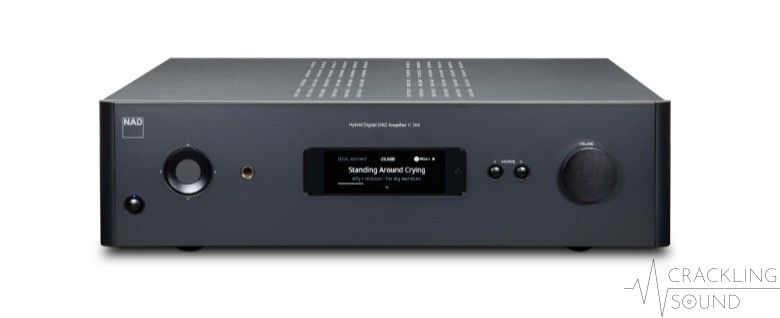
It is very similar to the combination of active electronics and mechanics as with the cassette player, DAT recorder, CD player. The last changes are felt in the lower price range, because they themselves, inherently, are not able to express the richness of detail, focus, transparency, depth, and shape of the sound stage, so the parameters that quality devices must improve during and after the playing period. One of the most obvious indicators of burning in power amplifiers, and even preamplifiers, is that they start playing louder in the same position as the volume potentiometer, and they have to be turned down several times during playing. It is as if they are gaining strength and potential at every moment.
How to burn in speaker systems?
The most drastic changes, however, occur in speaker systems. There are so many moving parts in the speaker units, and there are capacitors in the crossover, so it is not surprising that the burning-in process can take several months. First, you need to stabilize the magnetic field radiated by a large permanent magnet, then the moving coil (voice coil) must “pave” the way, the membrane must be chemically and mechanically stabilized and finally, you need to burn in rubber or synthetic suspension that attaches the membrane to the basket and whose flexibility determines the excursion and the accuracy of the membrane gait.

Until all these parameters are matched, the speaker will play hard, flat, and undefined. Speakers can also feel that they need less power from the amplifier which makes it easier to work. Electrostatic and ribbon speakers are the most critical for playing. I remember playing some of them that I owned for almost six months (!?) until a satisfactorily cultivated sound came out of them.
How to burn in audio cables?

Cables are no less sensitive to playback. Their playing can take a very long time, which has recently resulted in the emergence of several devices that allow cables to passively, without connecting them to devices, play for several days without stopping. Such devices emit into cables a complex electronic signal that forms the materials from which the cables are made not only electrically but also mechanically “shakes” them.
Audio burn in files for download
Below you can find audio burn-in files for use in your audio system. You can download this to your PC and burn it to an audio CD. Or you can save it to USB and play it that way. All files are downloadable.
Crackling Sound Full System Burn-in HD
Crackling Sound Subwoofer Burn-in HD
Crackling Sound Headphone Burn-in HD
Crackling Sound Full System Fine-Tuning HD
Crackling Sound Subwoofer Fine-Tuning HD
Conclusion
Although I am aware that it often cannot be otherwise, I can laugh when I see completely new devices being taken out of boxes in stores (and in a world whose behavior we often consider the measure of things). Those devices then are connected and switched on and sitting in front of them ready to make a very serious decision and perform value judgments that are anything but meritorious. It is impossible, for example, to make a qualitative judgment at hi-fi fairs, where most of the equipment on display comes almost directly from the factory.
Due to all the above, when and where possible, the assessment of the quality of an individual audio device should be made on the basis of listening to burned-in devices. Therefore, audio equipment retailers should have one product played in the store so that they can demonstrate it to interested customers. And that’s not that hard, is it!? That’s the way everyone gains. The device shows itself in the right light, the retailer is satisfied because he is more confident that he will make a profit, and the buyer is happy because he knows that his new device will sound at least the way he heard it when he decided to buy.
The last decade of the past millennium has brought full confirmation of the need to burn in audio components. And with it came software-based aids – various enhancers and burn-in discs that not only speed up this annoying, time-consuming, and annoying operation but also make its effects even more noticeable. Especially if they are achieved by a combined action of harder (playing audio) and easier (using playing software and hardware) ways.
